Category: Uncategorized
Does a Pediatric Dentist Cost More?

How Much Does a Pediatric Dentist Cost?
A popular misconception is that a pediatric dentist will cost much more than a general dentist. While it’s true that Pediatric Dentists may charge more than a regular dentist, the prices are not vastly different. Pediatric Dentists charge almost the same amount as a regular dentist. There are many reasons why you should consider a Pediatric Dentist for your child rather than a regular dentist. How much a pediatric dentist costs however, should not be a factor.
According to DentalPlans.com the average cost per child is $65 to $100 per child per checkup without dental insurance. Children should have a dental checkup twice a year.
Quick Math for a family with 2 children: $82.50 per child x 2 children x 2 times a year = $330 per year. This can really begin to add up the more children you have. Luckily we provide payment plans and offer flexible payment terms for our patients without dental insurance.
For most parents that have dental insurance for their children, the amount a pediatric dentist costs will simply be the co-pay (if applicable) of their insurance deductible.
Why A Pediatric Dentist Can Be Worth Every Penny
Children can be notoriously difficult to manage in the dentist chair, even for seasoned veteran dentists. Many general dentists primarily specialize in adult dental issues, and as such don’t have the disposition to deal with children. A pediatric dentist has experience and training necessary to put children at ease.
If a Pediatric Dentist Cost is Almost Equal To A Regular Dentist, It Should Be A No Brainer.
A dentist that specializes in children is used to dealing with patients with special needs, infants, and toddlers especially can be difficult dental patients. If you are considering whether or not a pediatric dentist is worth it, consider that establishing a good report with the patient and putting them at ease has tremendous value. Childrens dentists are also more specialized to deal with childrens dental issues.
How To Keep Dentist Costs Down
- Schedule regular checkups – seeing a dentist twice a year is a small price to pay compared to paying for complicated dental procedures.
- Practice good dental habits with your children at home like brushing regularly and flossing.
- Keep your kids away from sugary drinks and sweets like candy, encourage brushing after indulging.
- Purchase affordable dental coverage. If you have a large family the cost savings could be substantial.
How Much Will It Cost To Send My Child To The Dentist Each Year?
According to the American Dental Association, many parents will wind up paying out of pocket for their childrens dental care. The American Dental Association says that over 42.5% of Americans will forego dental insurance for their children.
The average yearly deductible amount paid for children ages 1 through 6 was $257 per year. For children ages 7 through 12 the average amount spent on yearly deductibles per child was $828 and for ages 13 through 18 that figure crept up another $100 to $928. These averages calculate routine visits, fillings, xrays, and many preventative treatments children would need between the ages of 1 through 18 years of age.
In Woodbridge, Dale City and Burke Virginia these prices are on par with what the rest of the country is charging.
What If I Don’t Have Dental Insurance?
Not to worry. Our office offers flexible payment terms and easy credit options for patients who do not have dental insurance or who need to supplement their dental insurance. We also accept cash, credit cards and personal checks.
Dental Sealant For Children

Should I Get Dental Sealant for My Childs Teeth?
Toothbrushing Can’t Reach Everything a Dental Sealant Can
Even if you are meticulous are brushing and flossing, food particles and plaque can still cling to the surfaces of teeth. Toothbrush bristles can’t quite reach into the grooves and deep pits to extract leftover food and plaque that can cause cavities. A dental sealant will protect any exposed areas vulnerable to debris by “sealing” the tooth from harmful bacteria.
Is A Dental Sealant Right For My Child?
It’s easy to apply dental sealants to your child’s teeth. A pediatric dentist will paint the dental sealant directly onto the tooth enamel, where it bond and quickly harden to form a protective barrier. As the sealant resin bonds into the pits and fissures it will seal the chewing surfaces of back teeth.
Once your childs dentist applies a the sealant it will bond fast and seal each tooth from plaque and acids. As long as the dental sealant is intact, the surfaces of the tooth will be shielded from tooth decay. Dental sealants are amazingly resilient. Sealants hold up well under the pressure of daily chewing and typically last for years before needing to be reapplied. Your child’s dentist will perform regular evaluations of the overall condition of the sealant during their regular checkups.
Adults Can Benefit From Dental Sealants Too
Children aren’t the only ones that can benefit from dental sealants. Decay forms in the depressions and grooves of teens and adults as well. It’s recommended that adults with healthy teeth without signs of decay have them sealed from developing cavities as well.
Many Parents Ask – Are Dental Sealants Safe For My Child?
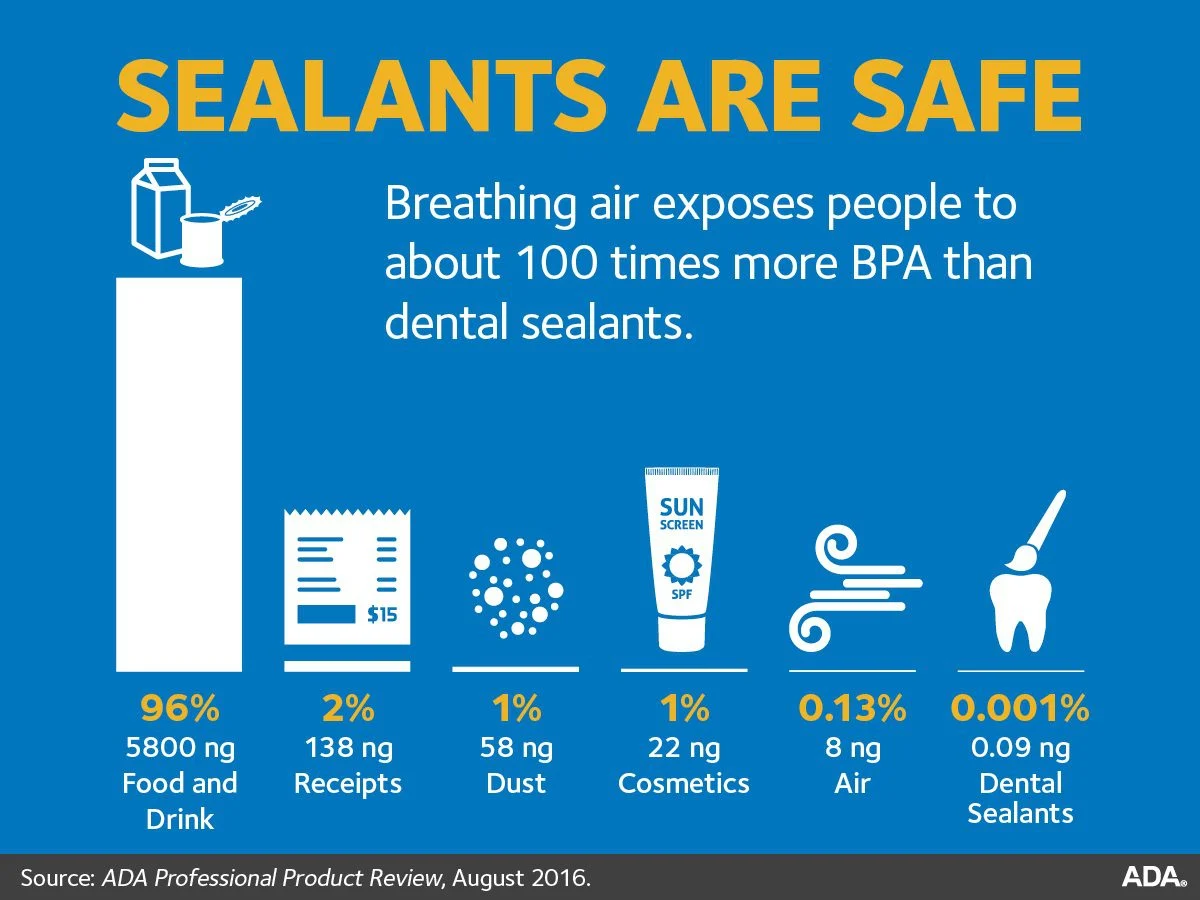
There is zero scientific evidence to demonstrate that dental sealants are associated with any adverse health effects whatsoever. Dental sealants are 100% safe for your child. In fact, you will prevent your child from developing harmful bacteria and better protect their health by getting sealants for their teeth. So again 100%, you should get a dental sealant done on each tooth in your childs mouth.
How To Prevent Tooth Decay From Forming:
- Brush at least two times a day with an toothpaste containing fluoride
- Floss regularly between the the teeth to remove leftover food particles and plaque
- Eat a balanced diet and limit intake of sweets
- Get regular dental checkups
Ask your childs dentist about whether dental sealants will help your child prevent tooth decay.
Where Can I Get Dental Sealants For My Child In Virginia?
Golden Pediatric Dentistry & Orthodontics performs dental sealants in our 3 offices in Woodbridge, Burke, and Dale City. Schedule a dental sealant procedure for your child today!
Why Choose a Kids Dentist Instead Of A Regular Dentist ?

Your children go to school and you go to work. You’re busy preparing dinner and they’re the ones that get to sit down and enjoy it. Parents and children do things differently, but does it makes perfect sense that they should see different dentists? Here are a few reasons why parents may prefer to send their child to a pediatric dentist vs. a dentist that mostly specializes in adults.
Kids Dentist vs. General Dentist
- Special Training For Children: Pediatric dentists have 2-3 years additional training immediately following dental school. This specialized schooling focuses on child psychology and early development of teeth and jaws. They know what to look for and can spot abnormalities in your child’s dental development quickly.
- Patients: General dentists treat patients of all ages, while pediatric dentists normally focus and specialize in children.
- Experience: Because pediatric dentists work almost exclusively with younger patients, they’re often more skilled at interacting with infants and kids with special needs. They’re also able to provide advice in the early development of children and can reinforce breaking bad habits like thumb sucking and pacifier use.
Here’s the good news, you don’t need to see 2 different dentists.
- …we treat children AND adults. Pediatric dental offices are designed with kids in mind but our dental clinic services adults too.
- …we are a family dentist so that means you and your kids can both see the same dentist which is super convenient to parents.
Wait a sec, I thought Pediatric Dental offices only dealt with children…
Normally they do, but our dental clinic is a little different. All of our dentists are qualified and specially trained to offer dental services to children of all ages. They can provide dental care for infants and special needs children as well, but in addition – we also treat adult patients as well. So if Dad needs a cleaning and Junior needs a cavity filled, no big deal – you can rest assured that both will receive outstanding dental care under one roof.
Still debating on a Kids Dentist vs a General Dentist?
Ask your child’s pediatrician for recommendations and they’ll tell you the same. Your child will feel immediately at ease with our kid-friendly staff. Our dental offices are located in Burke, Woodbridge, and Dale City. We deal with more major insurance providers and offer payment plans as well.
Are Dental Xrays Safe For My Child?

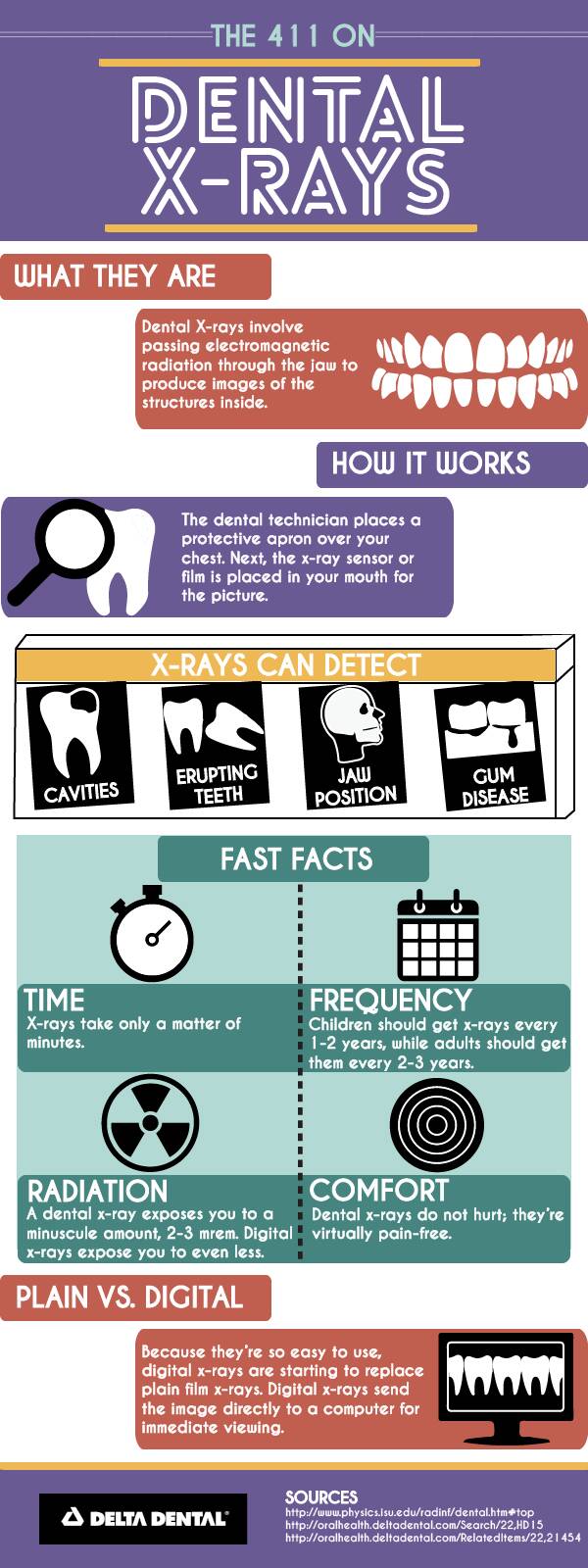
When scheduling a dentist visit for your child, many times your child might just need a checkup and cleaning. Occassionally, a thorough examination will involve performing a dental xray of your child’s teeth. Dentist’s use -rays for the purposes of taking images of the teeth and bones. The entire procedure is normal for adults but can seem a little scary to small children and even older kids. We wrote this article to educate parents that dental xrays performed in a dentist office are safe and provide valuable information to the dentist about the status of your child’s teeth.
X-Rays Are An Important Part Of Your Child’s Dental Health
An x-ray can appear to be intimidating and scary, especially for a child. It’s important to consider that x-rays are an integral part of dental health, and occassionally a necessary component of your child’s dental examination. We use dental x-rays to take pictures of the gums, bones, and teeth. X-rays are necessary to allow us to see teeth in a way that we can’t merely with a simple visual inspection.
What Will My Child’s Dental X-Ray’s Show?
The X-Ray enables us to see hidden cavities, check on the overall status of gum health, and ensure that your child’s jaws and teeth are developing normal. It’s for this very reason that dental xrays are such an important part of early identifying dental health issues. Childhood is an important time in the development of a child’s teeth, bones, and gums, and quite often sets the stage for their dental health as adults. This is why it’s so important that parent’s have a Pediatric Dentist detect and fix any issues as soon as they arise.
What Dental X-Rays Are And How They Work
How Safe Are My Child’s Dental Xrays?
Rest assured – our office takes every precaution to ensure that your child’s dental x-ray is 100% safe and comfortable. Here at our Burke Pediatric Dentist office, we perform digital x-rays, which are safer and faster than traditional film x-rays. The reason digital dental xrays are safer are because they use less radiation than traditional film xrays and provide computer images that can be easily edited and saved.
Is it normal to feel nervous about my child’s dental x-ray?
It’s completely normal for parents to be concerned with their child’s safety, especially during a procedure like an x-ray. Our dental x-rays are entirely safe and expose your child to 90% less radiation than a traditional film xray. Our Pediatric Dental Hygienist will also fit your child with a lead apron during their imaging to protect their body from any radiation at all. Taking the x-rays does not take long, and we make sure your child is comfortable and feels safe.
Digital X-rays Vs. Traditional Film X-rays
Traditional x-rays use film to capture images of the teeth, and have the same shortcomings as film cameras. Images takes longer to develop, they aren’t always very high-quality, and must be manually be scanned into a computer. Digital x-rays have all the high-tech benefits of using a digital camera. They instantly produce high-resolution digital pictures of your child’s teeth that we can edit and manipulate using our computer software. The images are instantly available on the screen, and we can zoom in or alter the exposure to show us even the smallest problem. Another additional bonus is that we can easily save the images to your electronic patient file. With digital technology, there’s no longer any risk of losing your child’s dental records.
When your child comes in for their digital x-ray, we’ll take a few moments to explain everything that we’re doing in kid-friendly terms. Your child may even enjoy seeing the pictures of their teeth displayed up on the screen!
Most Common Questions Parents Ask Pediatric Dentists

It’s normal for parents to have questions for their child’s dentist. An adult can ask the dentist important questions during their dental examination but a child doesn’t necessarily have those abilities to communicate during their visit. Frequently the questions parents ask pediatric dentists the most have to do with oral hygiene, how to prevent cavities, or whether it’s time for braces.
It’s Normal For Parents To Ask The Dentist Questions
Communication between doctor and patient is vital. As your child’s care provider it’s important that you know the right questions to ask during their dental exam. Over the years we’ve answered countless questions. We’ve comprised a list of the most frequently asked questions our Pediatric Dental Office has been asked.
Top Questions Pediatric Dentists Get Asked
- When should my child first see a dentist? This is probably the most popular question pediatric dentists get asked on a day-to-day basis. The most common time to bring a child for their first dental visit is when their first tooth erupts. It’s important to create regular dental habits as early as possible.
- What should I expect from my child’s first dental visit? Typically, on your child’s first visit to the dentist, the dentist will perform a brief examination of the teeth, gums, jaws, and then apply a fluoride varnish. The dentist will also work on getting your child to feel safe & comfortable sitting in the dentist’s chair.
- Do baby teeth matter if they’re only going to fall out anyway? This question we hear alot. What’s the reason for putting so much effort into taking care of baby teeth when they’re only going to fall out? Baby teeth matter just as much as adult teeth because they pave the way for how teeth will form in adulthood. How you care for your child’s baby teeth can have a long-lasting impact on their adult teeth.
- Should my child get braces? It seems like many children these days have braces, and if yours doesn’t, you’re probably wondering whether or not there is some sort of requirement. Luckily enough, it’s not required that you get braces for your child. However, if you’re concerned that their teeth aren’t growing in correctly, it might be time for an orthodontic consultation.
- Should you brush your child’s teeth? In short, yes! As explained in the previous question, baby teeth are important and taking care of them encourages good dental habits in your child’s life that will last a lifetime.
- Are x-rays safe for my child? X-rays are a routine part of dental visits for adults, but with exposing a child to radiation, this makes it a valid question a completely normal concern for parents. Rest assured, the risks associated with this very small amount of radiation are non-existent. Our office uses digital xrays which are safer than traditional xrays.
- How do you change your child’s diet to conform to good oral health? The way that we eat greatly impacts our oral health, and the same holds true for our children. To encourage the right dental habits, make certain your child eats a healthy, balanced diet. Limit their intake of sugary drinks and snacks, as these substances most commonly promote tooth decay.
- Should you consider sedation dentistry for your child? Occasionally children are very anxious and terrified of going to the dentist. We’ve seen this kind of dental phobia or anxiety, even many adults suffer from it. Sedation dentistry is an option to consider in order to calm your child’s nerves. Consult with your dentist first if you feel this may be a factor in your child’s care.
- What should you do if your child has a toothache? Children rough house and play. If your child is school age, they’ll frequently get bumps and bruises, that don’t require seeing a doctor. However, if your child complains of a toothache, you should try to set up an appointment with a dentist as soon as possible. For pain management until you can see a dentist, give your child acetaminophen. You should also rinse the area with warm salt water.
- How can parents prevent tooth decay? As parents, we all want what’s best for our children, so we understand that you want advice on the best way to take care of your child’s teeth. One of the best things you can do is to demonstrate regular, healthy dental habits, and promote the example setting the standard. And, off course, don’t forget to schedule regular dental appointments for cleanings and checkups.
For more answers to questions and topics about Children’s Dental Health & Pediatric Dentistry, visit our pediatric dentistry blog>.
Should My Child Get Dental Sealants?
Dental Sealants for Children
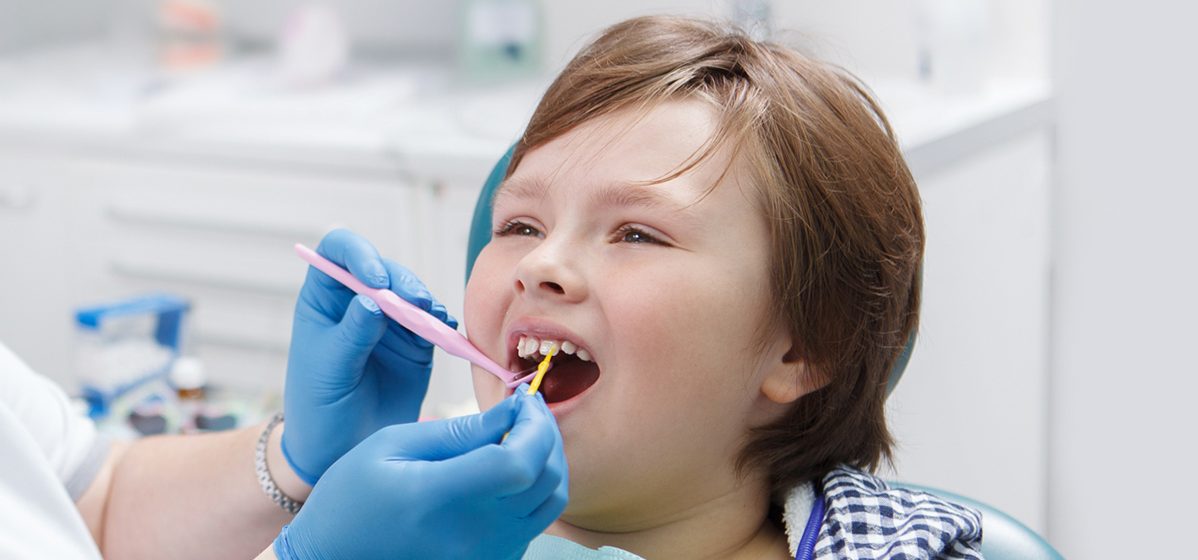
If you’ve been wondering whether you should get dental sealants for your child, the answer is emphatically – yes! Sealants are a fast and efficient method of protecting your child’s teeth. The applied sealant acts as a barrier to prevent cavities from forming on vulnerable areas of the tooth. A Pediatric Dentist will often dental sealant to the chewing surfaces of a child’s back teeth. The sealant will form a cover over the deep pits and grooves of the child’s teeth. Children with baby teeth as well as permanent adult teeth can benefit from having a dental sealant applied.
Brushing Can’t Reach Everything
Even if your child is practicing good brushing and flossing habits the toothbrush bristles cannot reach all the way into those deep pits and grooves to extract food and plaque. Sealants help protect these vulnerable areas where plaque and food settle in and form cavities.
How Are Dental Sealants Applied?
A dental sealants is easy for one of our pediatric dentists to apply. The dentist brushes the sealant onto the tooth enamel, where it quickly bonds to the tooth and hardens. This plastic sealant resin bonds onto the depressions and grooves (fissures and pits) of the teeth’s chewing surface. The sealant acts as a barrier and protects tooth enamel from plaque and acids. During your regular dental visits, your pediatric dentist will check the condition of the sealants and reapply them when necessary.
The likelihood of developing fissure and pit decay begins early in life, so children and teenagers are prime candidates. Adults can benefit from sealants as well.
Are Sealants Safe For My Child?
They are 100% safe (unless your child has some sort of allergy). In regards to questions about BPA, the amount in dental sealants is less than 0.0001% which is less than touching a receipt or household dust.
How Long Do Sealants Last?
As long as the sealant remains intact, the tooth surface will be protected from decay. Sealants hold up well under the force of normal chewing and may last several years before a reapplication is needed.
Do Dental Sealants Hurt?
No, getting dental sealants doesn’t hurt for the patient. In fact, it’s a quick and painless process. Your child’s Pediatric dentist will clean and dry their teeth before placing an acidic gel on their teeth. This gel serves to roughen the tooth surface so that a strong bond may form between the teeth and the sealant. The dentist will then rinse off the gel n before applying the sealant onto the grooves of the teeth. Your dentist will then use a special blue light which hardens the sealant.
Are Dental Sealants Expensive?
They are inexpensive in comparison to other restorative procedures such as fixing a cavity, performing a root canal or putting on a crown. Many insurance companies cover sealant procedures as they are looked at as preventative treatment. They are a low cost alternative to costly dental treatments due to decay and will help better protect your child’s teeth from cavities.
Burke Baby Dental Care for Infants, Toddlers
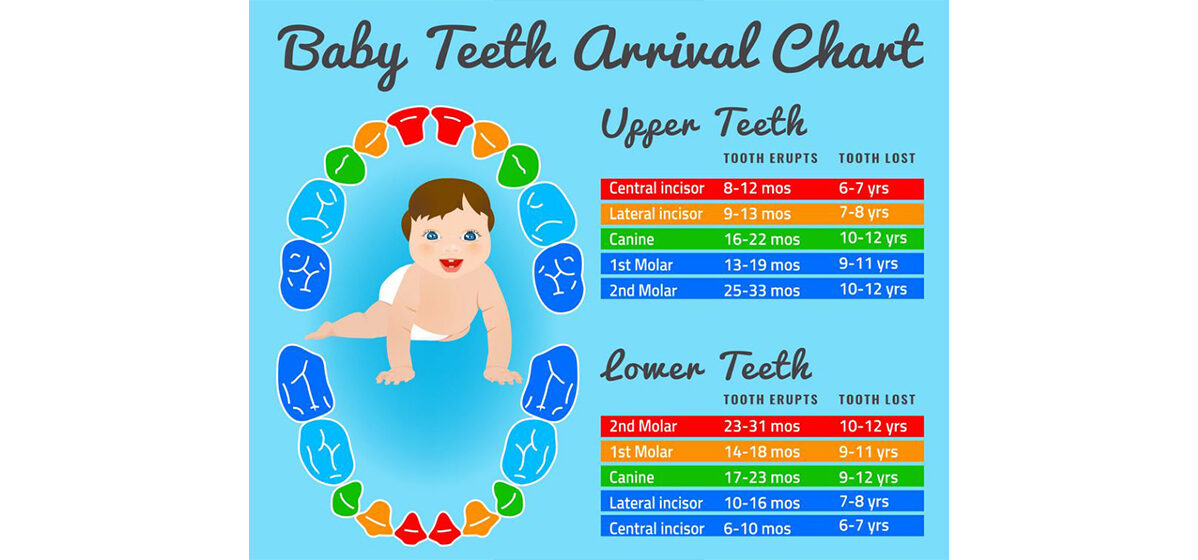
Golden Pediatric Dentistry & Orthodontics provides expert baby dental care for children of all ages, including newborns, infants, and toddlers. We’ve written this informative article on Baby Dental Care to educate new parents on their babies dental needs. We answer many questions new parents have concerning how to provide dental care for their baby.
How Do I Care For My Babies Teeth?
Caring for Baby’s Gums
You may begin caring for baby’s gums right away. In the beginning, the baby dental care you provide won’t involve a toothbrush and toothpaste yet. Instead, take the following steps:
- Use a soft, lightly moistened washcloth or hand towel to gently wipe your baby’s gums at least twice a day.
- Remember to especially wipe your baby’s gums after feedings and right before bedtime.
This will prevent bacteria from clinging to gums which can leave a sticky plaque behind that damages infant teeth as they come in.
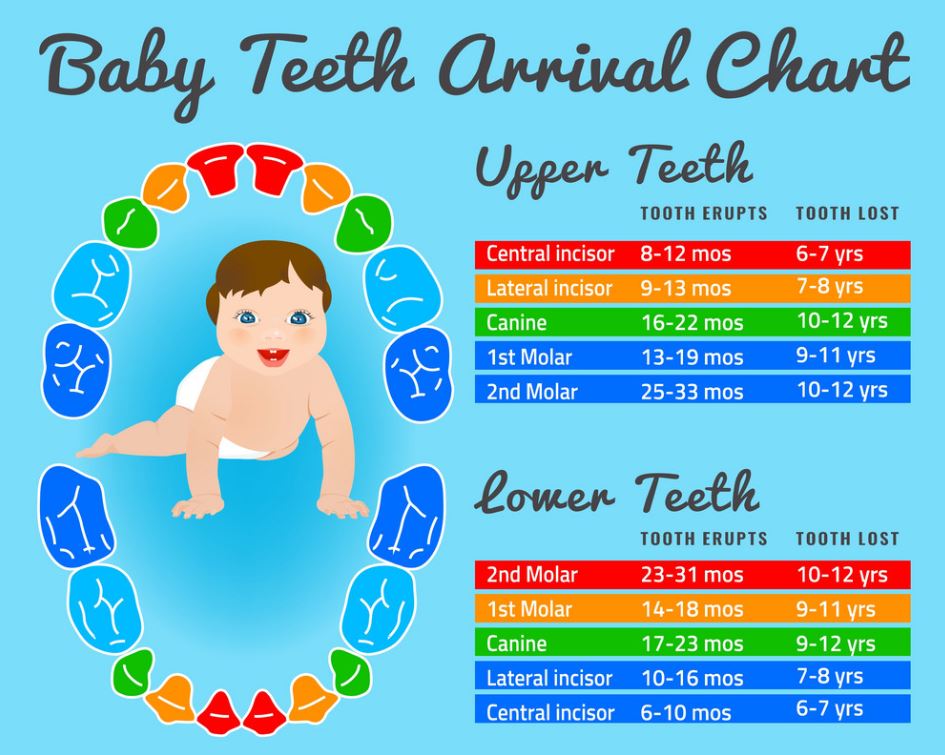
When Do Baby Teeth Come In?
Brushing Baby’s Teeth
When your babies first teeth start to pop up, you can graduate to a toothbrush. Until that happens we recommend that you use one with a:
- large handle
- soft brush
- small head
Just wet the toothbrush at first. When you notice teeth begin to erupt, you should start using toothpaste (about the size of a grain of rice). You can increase to pea-sized amounts of fluoride toothpaste when your child is around 3 years of age. Gently brush all around your babies teeth — front and back.
It’s recommend that you brush your baby’s teeth until they are old enough to hold the toothbrush. Continue to supervise the process until your child can rinse and spit without help. That usually happens at around age 5 or 6.
The best form of baby dental care is to keep a vigilant lookout for signs of baby tooth decay — brown or white spots or pits on the teeth. If you notice any problems, take your child to a pediatric dentist for an exam.
When Should I Take My Baby To The Dentist?
Experts all agree that you should take your baby to the dentist by their 1st birthday and certainly before their 2nd birthday. The general rule of thumb is that when you notice teeth begin to erupt, your baby should see a dentist. Our Burke Pediatric Dentist office sees children of all ages from infant all the way through adolesence.
What To Do When Your Baby Starts Teething
These tips can help relieve your baby’s discomfort.
- Give your baby a cold teething ring or a cold cloth to chew or suck on.
- Rub your finger on your baby’s gums.
- Ask your Pediatrician if your baby can have infant acetaminophen (Tylenol). NOT aspirin.
- Ask your doctor before using teething gels or tablets.
Preventing Cavities In Baby Teeth
You should avoid giving your child fruit juices, sodas, or sugary drinks. Also avoid putting anything sweet — such as sugar or honey — on your baby’s pacifier. Sweet drinks — even milk — can settle on the teeth. This can lead to baby tooth decay — also known as “bottle rot”. Bacteria feed on the sugar from sweet drinks and produce acid, which attacks baby’s teeth. Experts are also saying that you should avoid kissing your child on the lips until their teeth are formed.
Visit our offices:
- Burke Pediatric Dentist
- Woodbridge Pediatric Dentist
Emergency Pediatric Dentist in Burke, VA

Parents never want to see their children suffering from dental pain or discomfort. When a pediatric dental emergency happens, parents may ask themselves, “Where can I find an emergency pediatric dentist near me?” Luckily, the help you need is just a phone call away to our children’s emergency dentist office located in Burke, VA.
Where to Find An Emergency Pediatric Dentist
If your child is experiencing a dental emergency, it’s critical that you find treatment as fast as possible. Delaying care can lead to unnecessary complications and may lead to a more extensive dental procedure. Our emergency pediatric dentists provide compassionate children’s dental care in a welcoming atmosphere. We realize that lots of children are anxious when visiting the dentist, so it’s our goal to make every child feel safe and comfortable during the treatment process. If you think that your child is suffering from dental pain or some type of dental emergency, please don’t hesitate to contact our emergency children’s dentist office and schedule treatment.
What Types of Children’s Emergency Dental Services Do You Provide?
Pediatric dentist emergency care encompasses any urgent dental services that immediately relieve a child’s dental pain. These emergency dental services can also repair structural damage to teeth or address immediate issues that could worsen if left untreated. Our skilled emergency pediatric dentists also offer restorations and pain management aftercare, if required. Please call our office if your child requires the following services:
- Treatment for dental pain & severe tooth aches
- Emergency tooth extraction
- Emergency repair of chipped, fractured, or avulsed teeth
- Pain management for wisdom teeth pain
- Repair of missing tooth fillings or crowns
- Orthodontic pain caused by loose brackets or wires in braces
- Treatment for dental infections
When Should I Call For Pediatric Dentist Emergency Care?
I’m not certain if my child’s symptoms require pediatric dental emergency care. When should I look for emergency pediatric dentists?
If your child is has any of the following conditions or symptoms, they may require urgent dental care. We recommend that you get in touch with our emergency dental office if you notice any of the following.
- Broken or Fractured Teeth
- Knocked-Out (Avulsed) Teeth
- Severe Toothache Pain and Pressure
- Tooth Sensitivity
- Dental Decay (Cavities)
- Dental Abscess
- Lost and Loose Fillings
- Orthodontic Pain and Injuries
- Worn Tooth Enamel
What To Do For Your Child In A Dental Emergency
I think my child’s dental health problem is serious. Should I search for emergency pediatric dentists or visit an area hospital?
At our pediatric emergency dentist office, we are focused on helping your child achieve optimal dental health. However, some dental emergencies require more intensive treatment than a pediatric dentist emergency care office can offer. Call 911 or visit your local hospital if your child experiences any of the following:
- Severe swelling around the face and gums
- Uncontrollable oral bleeding
- A sudden, painful injury to the teeth, jaw, face, or head
How Much Does a Visit to a Pediatric Emergency Dentist Office Cost?
One of the most common questions we get asked is, “What is the cost when visiting an emergency pediatric dentist?” Your charges will depend on what treatments are needed to alleviate your child’s symptoms, and what your insurance policy covers. At our dental group, we understand that unplanned emergency dental procedure can put a strain on your family’s finances. Even without insurance, the cost of children’s emergency dental care can be affordable with our dental financing options. Please give our children’s emergency dentist office a call for more details about pricing and payment.
What Does a Pediatric Dentist Do?
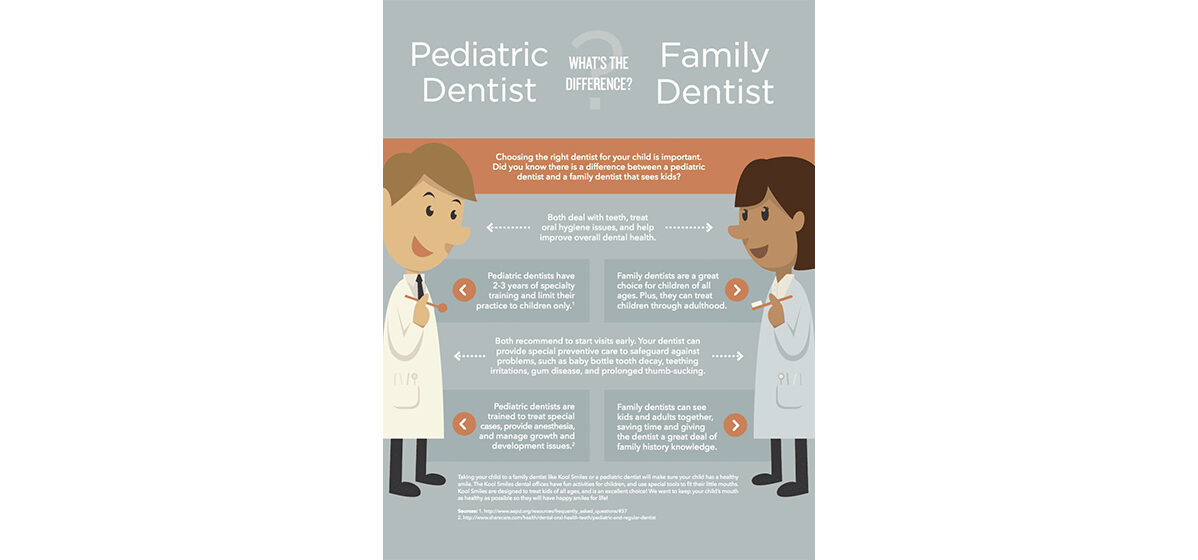
Our Burke Pediatric Dentists Give a Brief Explaination of The Services We Provide
A Pediatric dentist or Pedodontist treats infants and children throughout adolescence. There are nine fields of dental specialties and Pediatric Dentistry is one of them. Dentists in this field provide a wide range of treatments.
Pediatric Dentists undertake an additional two or three years of child-specific training after fulfilling dental school requirement. They also train in child psychology in addition to receiving dental training, which enables them to better communicate with children.
Should My Child See a Pediatric Dentist?
Parents should take their child to see a pediatric dentist for the following reasons:
- So they may ask the dentist questions about new or ongoing oral health issues with their child.
- To find out whether the child is at risk for developing cavities.
- To get information about stopping unhealthy orabl habits (thumb sucking).
- For preventative treatments (fluorides and sealants).
- In order to receive reports about how the child’s teeth and jaws are growing and developing.
Random Fun Dental Fact:
Tooth enamel is the strongest substance in the human body; because it’s so durable, healthy tooth enamel protects teeth from cavity-causing oral bacteria. The enamel in your teeth is actually stronger than steel, but is much more brittle.
How Our Burke Pediatric Dental Office Is Different Than Other Dental Offices
Golden Pediatric Dentistry Office in Burke, VA is colorful, fun, and child-friendly. We feel that it is essential that your child feel comfortable, safe, and trusts their dentist from the outset. Our pediatric dentists focuses on several different forms of oral care.
What’s The Difference Between a Pediatric Dentist and a Regular Dentist?
Diagnosis & Examinations
Dental Exams, X-rays, and computer imaging allow our pediatric dentists to predict and correct future oral problems in your child. Examples include overbites, underbites, teeth grinding, and jaw irregularities. In some cases, it’s best to correct these issues early in childhood. Our Burke Pediatric Dental office provides expert diagnosis and preventitive treatment.
Dental Treatment
In addition to preventative treatments (fluoride and sealant applications), a Pediatric Dentist also performs pulp therapy and treats oral trauma. If primary teeth are lost too soon, a pedodontist will provide space maintainers to ensure that your childs teeth do not become misaligned.
Oral Education
Teaching good oral hygiene is a major part of any pediatric dentist’s duties. Not only can your child’s dentist help him or her understand the importance of daily oral care, but will provide parents with information on which tooth paste to use, proper diet, how to stop thumb-sucking, and a wide range of related topics.
Other Treatments
Pediatric dentists treat a range of oral health issues in children. Other common services Pediatric Dentists provide are: filling cavities, removing teeth, fixing broken teeth and treating sensitive teeth. They administer anesthetics for certain procedures and are able to write prescriptions for antibiotics and pain medications. A Pediatric Dentist can also identify instances in which orthodontic or surgical work is necessary or advisable. For instance, pediatric dentists identify when teeth need to be straightened and refer patients for orthodontics, another service we offer under the same roof at Golden Pediatrid Dentistry & Orthodontics.
Reports & Updates
Pediatric dentists are experts about the latest advances in the field of child dentistry. For example, Xylitol (a popular natural sugar substitute) has recently been shown to protect young teeth against cavities, harmful bacteria, and tooth decay. Children who don’t normally see a dentist regularly can miss out on beneficial information and the latest advancements in dental procedures.
How Can Parents Help Prevent Tooth Decay?

Children are born with 20 primary teeth; with these they learn to chew and speak. Eventually their jaw accommodates for the permanent adult teeth that will appear several years later. During these formative years children are especially susceptible to decay, which can cause pain and tooth loss. These are both serious problems that could interfere later in life with their oral development as adults. There are a number of things that parents can do to ensure to prevent tooth decay in children.
Our Woodbridge and Burke Pediatric Dentists Want To Educate Parent’s On Preventing Tooth Decay
Our Woodbridge and Burke Pediatric Dentists are committed to helping parent’s take proactive steps to keep their child’s teeth as healthy as possible. This article is informative for parent’s of children of all ages, even if your child is a baby – it’s never to early to be proactive about your child’s oral health. Our Pediatric Dentist office in Woodbridge and Burke, VA has written an article to help educate parent’s in the local area that there is a dentist near by that genuinely cares about their child’s oral health sight unseen and want’s to help them make a difference.
5 TIPS TO PREVENT TOOTH DECAY IN CHILDREN
- Establish a tooth brushing routine with your children. Routines are great ways to teach children. Once they get in the habit of brushing everyday, that will continue into adolescence and adulthood. Children may be reluctant at first, but most will make it a habit if the parent set’s the example with consistent reinforcement and demonstrating their own routine of good dental care.
- It’s advisable to help children eight years old and younger with brushing their teeth, and still supervise their routine until age 11. Eight years old seems appropriate in most instances, but until children is able to tie their shoes, they don’t really have the necessary skills to brush their teeth on their own. By giving them a hand, parents can make certain that no food is left behind, which often leads to cavities. Experts say, even after children are able to brush on their own, parents should still check their routine every so often to ensure their child is doing a good job of brushing their own teeth.
- Make sure your child sees a pediatric dentist regularly. A child’s dentist appointment is just as important as an adult’s – they’ll demonstrate that good oral hygeine is a critical part of their overall health, as well as look for early signs of any tooth decay. Your child’s dentist will also offer strategies for their daily oral care, and advise on any issues like recent dental trauma or maintaining braces.
- Watch your child’s sugar intake. Quite often, there is alot of sugar in the juices and drinks that children consume. This has quietly led to a rise in tooth decay among pre-adolescents. There is a great resource we can recommend on how to limit your child’s sugar consumption. As always, your child’s pediatrician is the best source to consult with in regards to their nutrition.
- Demonstrate your own good dental habits. Kid’s learn by example! If they that their parent values good dental health and makes it a priority in their own life, so will they. Make brushing your teeth a family moment – have everyone brush their teeth together in the morning and then together again at night before bedtime.
You Can Help Your Child Avoid Living With Tooth Decay
Spare your child alot of painful sleepless nights by following the above six tips. You’ll help them prevent tooth decay, avoid infection, the loss of a tooth and or other serious oral issues. The best advice to ensuring your child always has a smile they can be proud of is to make sure they see they dentist regularly, especially if you know they are suffering some sort of dental issue.
Pro Advice: Turn Tooth Brushing Into A Game
- Brush teeth during commercial breaks during their favorite TV show. During each 30-60 second commercial break, is the perfect time to get them to spot brush their teeth just because! Make it a game to see if they can finish before their show starts again.
- Set an egg timer to see if they can brush their teeth the entire time. Challenge your child to keep brushing their teeth until all the sand has run out. You can also buy your child a toothbrush that blinks led lights or plays music for two minutes.
- Play their favorite song while they brush their teeth. There is a free app called Brush DJ that will plays music in your library for two minutes and as an added bonus it lets you set reminders for your child to brush, floss and visit the dentist.